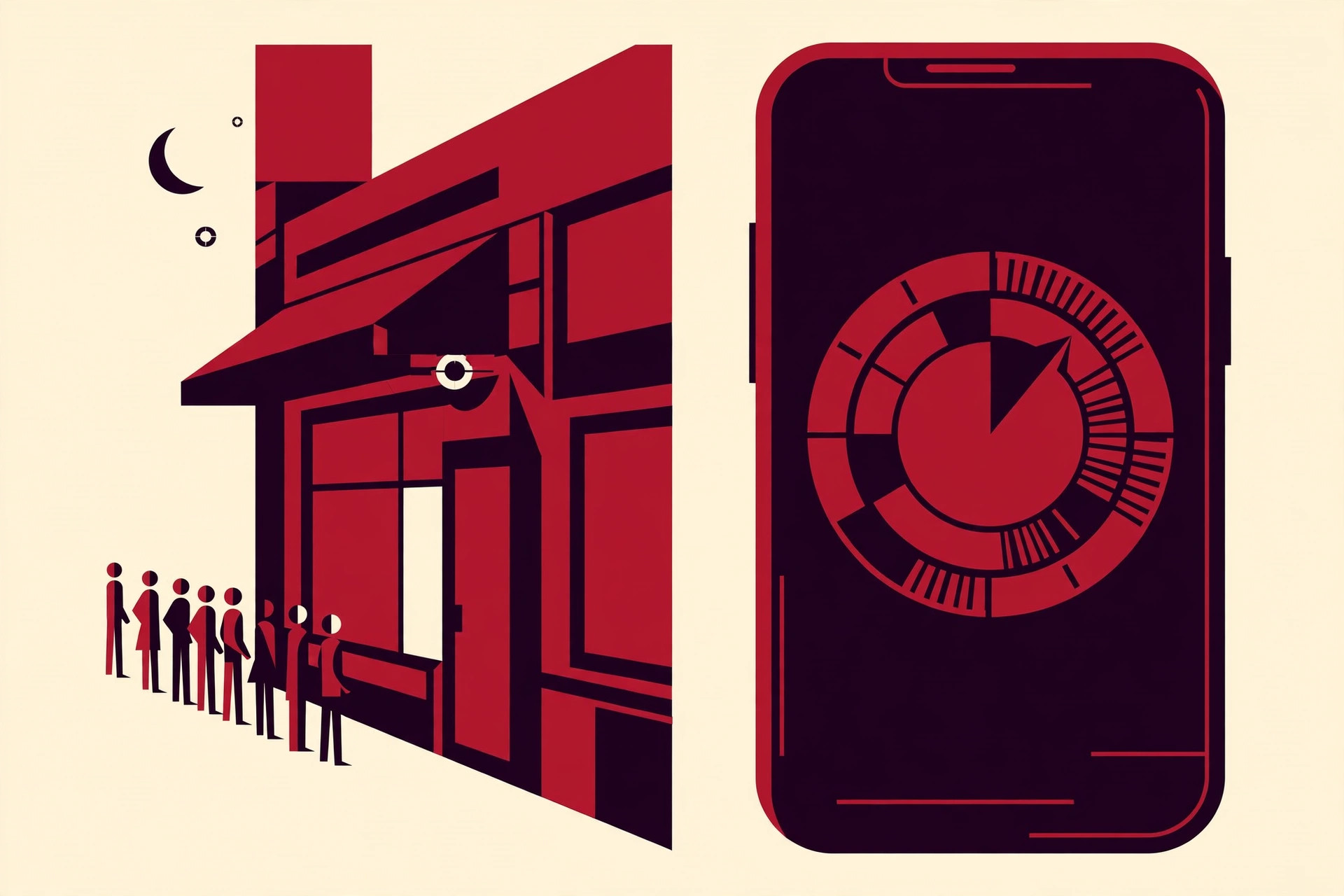
Black Friday has two arenas: the in-store doorcrasher, limited stock, first-come-first-served — and the online drop, everything-live-at-midnight, sold-out-in-minutes. They look like the same event, but the strategy for each is completely different. Playing them with the same plan is how you end up cold, tired, and still empty-handed.
Understand the scarcity you're dealing with
Doorcrashers are scarce in quantity: a handful of units per store, gone to whoever is physically there first. Online drops are scarce in time: the deal is available to everyone, but only until the counter runs out — which can be minutes. Same word, "limited," two very different pressures.
This matters because it changes what you control. In a doorcrasher, you control your arrival time and your position in line — that's almost everything. In an online drop, you control your readiness: logged in, payment saved, product page open, finger on the button. Effort goes to different places.
The doorcrasher playbook
Doorcrashers only make sense for a short list of conditions. If any of these are missing, don't go:
- The item is on your actual wishlist — not something that merely looks exciting on a flyer
- The price is one you've verified against your tracking, not just a big crossed-out number
- You're willing to arrive well before opening — the units go to the first arrivals, not the punctual ones
- You have a backup plan for the same item at a normal sale price, because you will not always win
The biggest doorcrasher mistake is treating the trip as free. It isn't: it's your sleep, your morning, your fuel, your time standing in the cold. Add that cost to the price mentally. A genuine steal is still a steal. A mediocre discount that cost you four hours of your Friday is a loss wearing a costume.
Call the store the day before and ask how many units they're expecting and whether there's a ticketing or wristband system. Many stores hand out tickets before the doors open — knowing that turns a gamble into a plan.
The online-drop playbook
Online drops reward preparation over speed — because at midnight, everyone's fast. The edge goes to whoever removed every possible friction beforehand:
- Logged in, payment method current, shipping address saved — verified this week, not assumed
- The exact product page bookmarked (not the category page, not the search results)
- You know exactly when the deal goes live — and in which time zone the store means
- One device, one tab, no multi-tab juggling that gets your session flagged or throttled
And set a hard rule: if it's sold out in the first wave, decide in advance what you do. Restocks sometimes appear later in the day as carts expire. Decide now whether you'll check back once, twice, or walk away — because "just one more refresh" at 2 a.m. is how online drops eat entire nights.
Don't forget the third option: the early online sale
Here's what the doorcrasher-versus-drop framing hides: a huge share of Black Friday pricing now goes live days or weeks before the day itself, quietly, online, with full stock. No lines, no midnight refresh, no pressure. If your wishlist item is available at your ceiling price on a random Tuesday in mid-November — buy it then. The "event" is marketing. The price is the price.
The calm shopper's rule: check prices on your wishlist weekly through November. If your number appears before Black Friday, take it and stop. You just skipped both arenas and still won.
When to skip both
Skip the doorcrasher when the item isn't on your list, when you can't verify the price history, or when the trip costs more than the savings. Skip the midnight drop when you wouldn't stay up for it on a normal night, when the site is already buckling under load, or when the discount only exists for a color or bundle you don't want. FOMO is the most expensive thing sold on Black Friday, and it's always in stock.
Pick your arena in advance
Go back to your wishlist and write one word next to each item: store, online, or whenever. Store items get the doorcrasher prep. Online items get the midnight prep. Whenever items get watched calmly through November and bought at your price, event or no event. That's the whole strategy: the right plan for the right item, decided before the hype starts.